Rise of the Machines
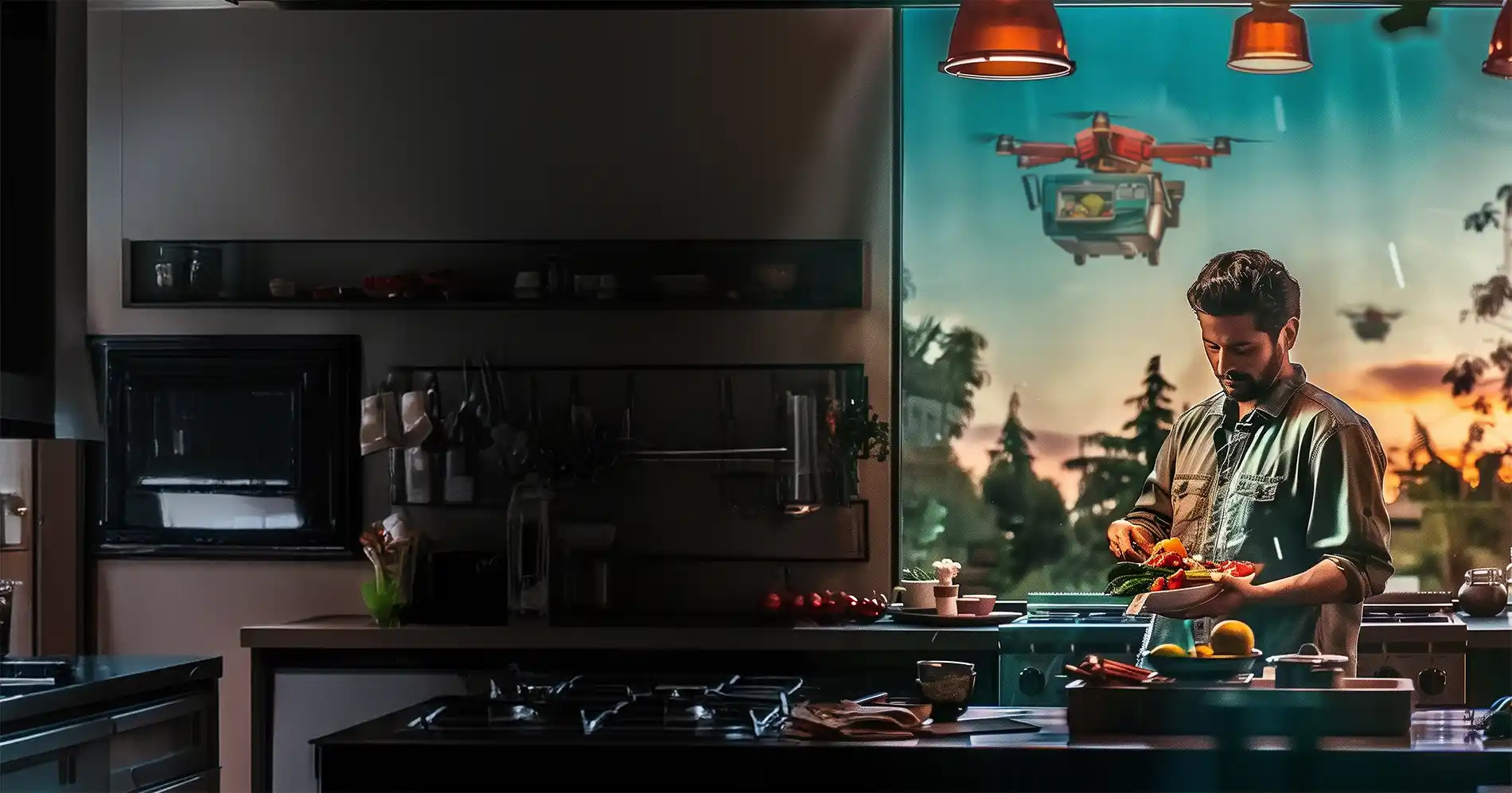
Once upon a time, autonomous systems were the stuff of science fiction. Not anymore. Cars that drive themselves and you around town, drones that bring prescriptions to your door, robots that assemble products alongside humans—these are all a reality today, as autonomy becomes increasingly ingrained in our daily lives.
The University of Texas at Arlington has established itself as a leader in developing and refining the systems and controls that make autonomy a reality. The work requires the skills of experts from a range of different disciplines, from computer scientists to electrical engineers and beyond. In the following pages, the evolving work of three of these experts will offer a glimpse into how the field has developed and the technology
Frank Lewis: Optimizing Autonomous Vehicles
"Artificial intelligence is all the rage, but it is a set of tools for machine learning, neural net appropriation, and tuning of an identifier for system dynamics," explains Frank Lewis, UTA's Moncrief-O'Donnell Endowed Chair Professor of Electrical Engineering. "As electrical engineers, we must adapt it so we can be sure that we know what the system is doing and find a way to get the commands to work correctly every time."
His research into autonomous systems control and optimization has spanned four decades. Over that time, he's investigated nonlinear feedback control systems, reinforcement learning for optimal control performance, optimal synchronization of multi-agent networked systems, neuropsychology for feedback control, robot decision and control, machine learning in automatic feedback systems, small autonomous rotorcraft vehicles, and aircraft control systems.

"Our group is doing some of the most impactful research in autonomous vehicles, driverless vehicles, and microgrid power control, using tools from multi-agent systems to improve their control and response for greater efficiency," Dr. Lewis says.
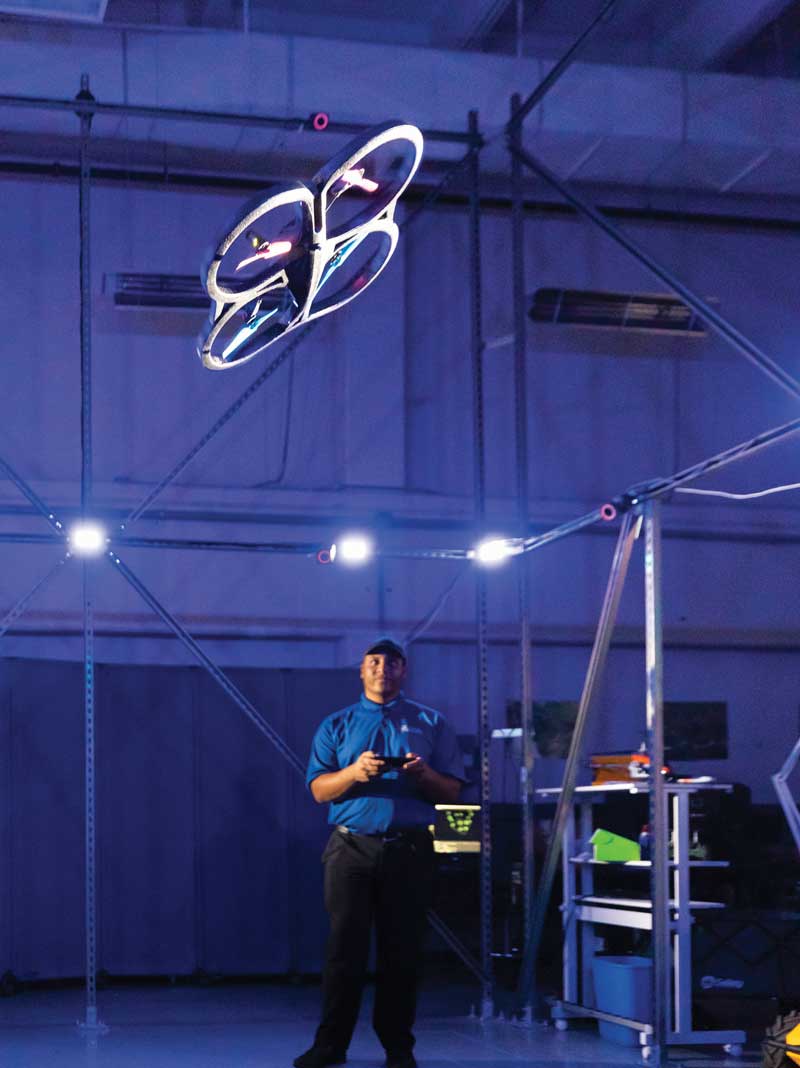
Their work is greatly facilitated by the labs on UTA's main campus and at the UT Arlington Research Institute (UTARI), as they provide Lewis and his team the opportunity to explore how to build autonomous systems and test them in real-world situations. UTARI, for example, has a VICON system of 16 cameras mounted around a room that can control a vehicle and track its position and reaction to commands at all times. The site is also adding a netted testing facility for unmanned aerial vehicles (UAVs).
"We have students at all levels working in our labs," Lewis says. "We rely on student organizations and mentors to teach undergrads and junior graduate students, and that student-to-student teaching works. We have master's students who are paid as research assistants who are making meaningful contributions to projects with industry applications, which is valuable as they move on and begin their careers."
Yan Wan: Delivering a Community Impact
Yan Wan is at the leading edge of autonomous delivery of goods and people, with a catalog of research that includes air traffic management and the use of drones for search and rescue and emergency applications.
She has worked on the use of drones for emergency purposes for more than a decade and continues to see that application evolve, with new capabilities emerging all the time that allow the equipment to perform many additional tasks.
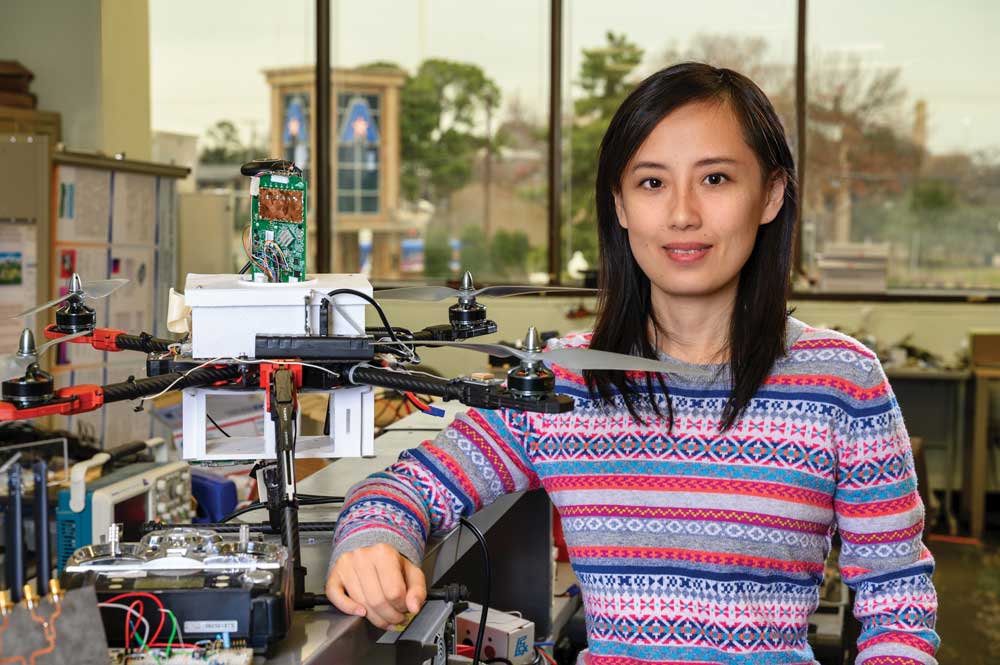
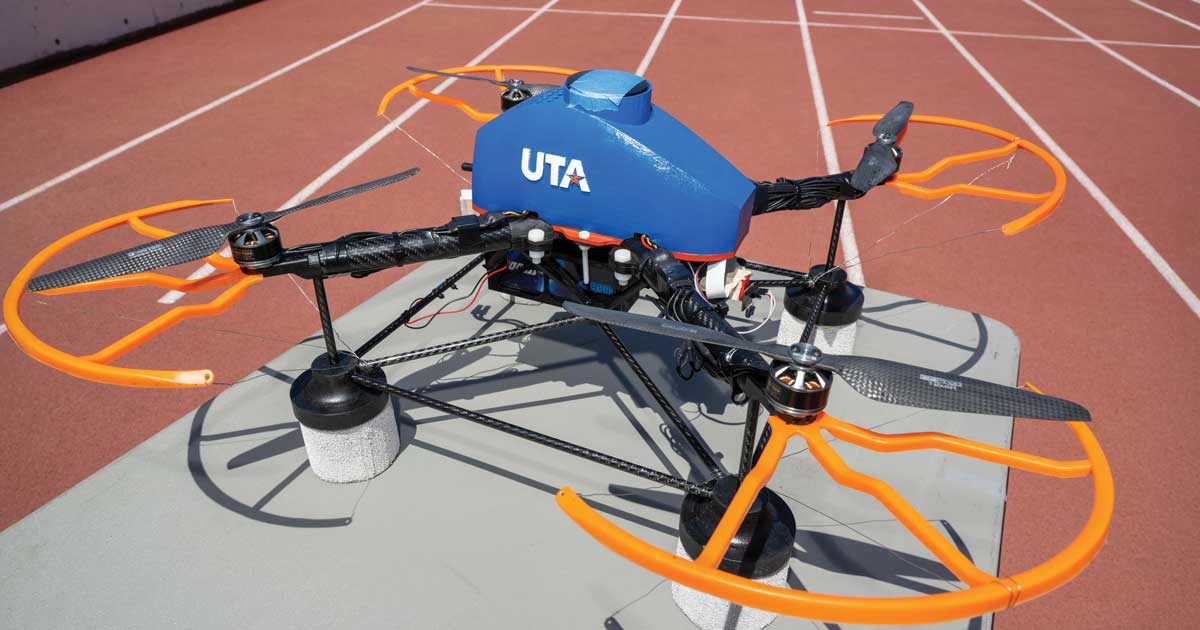
In 2017, Dr. Wan was part of a team that received a National Science Foundation grant to develop an open-networked airborne computing platform—a concept that relies on an airborne network formed by aerial vehicles with direct flight-to-flight communication links to achieve real-time computing in the air—to enable UAVs to help first-responders better coordinate their efforts during emergency or disaster responses. Additionally, the team developed a universal plug-in hardware unit that can fit into any UAV to enable the use of the computing platform.
Wan is now working with the city of Arlington on multimodal delivery with UAVs and unmanned ground vehicles (UGVs) to develop ways for them to safely and efficiently complete deliveries while interacting with traffic and the environment. The North Texas Council of Governments, industry partner Air Traffic Solutions, and UTA's Institute of Urban Studies are also involved with this project, and there are plans for two demonstration events to show how UAVs and UGVs can work together to the community's benefit.
Wan's role is to develop models, decision algorithms, and other tools to create a solution for vehicle scheduling that a) considers safety and efficiency, b) is transferable to other situations, and c) allows the team to collect data that will be useful in future, larger endeavors.
"As electrical engineers, we must adapt [AI] so we can be sure that we know what the system is doing and find a way to get the commands to work correctly every time."
"The Arlington project is a good example of the impact we're having on the community," she says. "The city has been advancing in preliminary work on autonomous transportation for several years. With multimodal delivery, we can address the pollution and traffic issues and make community delivery more efficient and reliable."
In a separate project with Lewis, Wan looked at microgrid capacity. In the United States, the power grid is strained, with DC (direct current) distribution networks emerging as alternatives to the current standard, AC (alternating current) networks. The networks are critical to the scalable integration of renewable energy resources and fleets of electric vehicles.
All the systems operating in a complex environment act on each other. The uncertain dynamics of environmental patterns create new data types and enable the spatiotemporal-scenario data-driven approach to decision making. Optimal control can be used to determine how a system will react to cues over a period of time, as well as how to make the system work at its most efficient based on that data. Reinforcement learning is a data-driven type of machine learning where computers learn to behave in an environment by performing actions, seeing the results, and reacting accordingly to achieve a specific outcome.
Lewis and Wan's goal is to combine both optimal control and reinforcement learning into a unified theory that will allow efficient, realtime feedback control of interacting complex systems.
Eric Tseng: Looking Outward to Market
Ultimately, research needs to consider the market where it can make money through tech transfer or industry partnerships. National Academy of Engineering member and Distinguished University Professor Eric Tseng worked for Ford Motor Co. for three decades before joining UTA. He was awarded more than 100 patents for his work on autonomous controls, about a third of which have been implemented on Ford vehicles, including driver-assist technology, stability control and lanechange assistance, and AI driving.
Dr. Tseng is UTA's first hire under its Recruiting Innovative Scholars for Excellence (RISE 100) initiative, a $60 million effort to add 100 new tenure-system faculty over the next several years. Funded in part through the support of the UT System's Regents Research Excellence program, RISE 100 is targeting scholars with expertise in areas that will make an impact in Texas and the Dallas-Fort Worth Metroplex, supporting the growth and development of the region's economy, society, and culture.
"With the rapid growth of automation, it is increasingly critical for controllers to monitor and understand both the system's status and its surrounding environment, detect faults, make informed and explainable decisions, and interact appropriately with people," Tseng says. "I am eager to continue making meaningful contributions in this field."
Looking ahead, he hopes to explore human-robot interaction in UAVs for inventory tracking, product delivery, and military and search-and-rescue applications, as well those that can benefit the aging population—such as providing essential assistance in daily tasks—or manufacturing, such as amplifying human productivity.
"Texas is heavily invested in autonomous research and applications," Tseng says. "With the Texas Department of Transportation's investment in an autonomous freight corridor between Houston and Dallas, UTA, along with the UT and Texas A&M Systems, can lead important initiatives and drive meaningful advancements. This, combined with the trend of companies relocating to Texas, will create more industry job opportunities for our students."
Tseng also hopes to enhance research innovation on campus and ramp up technology transfer to bring good ideas to market, areas in which he's extremely well-versed and UTA is poised to make significant breakthroughs.
Together with Eileen Clements, interim executive director of UTARI, he aims to expand forums with faculty, researchers, and their students to allow them to learn about each other's research and identify complementary interests and areas of work. These conversations could inspire collaboration and attract potential industry partners. Connecting stakeholders will enable researchers to refine their focus, spark new ideas, and create collaboration opportunities, ultimately leading to technology transfer.
"Customers may not know what they want, but through conversations, we can get a better idea of their needs and how we can fill them," Tseng says. "Understanding a company's needs will enable us to focus on applications that lead to technology transfer, as well as basic research that the industry is willing to invest in." ₪