
It's a Global Challenge
Sustainability is crucial to human survival. For communities across the globe to thrive, efforts to find sustainable solutions to the issues caused by climate change must become a priority. Researchers in the College of Engineering understand this better than most. Through their work on farming, flooding, infrastructure, and more, they are making breakthroughs and developing resources they hope will have lasting effects in the global fight for a brighter future.
Whether investigating ways to reduce flooding, measure greenhouse gases, or build better infrastructure, UTA engineers are tackling climate change concerns head-on.
Farming and Food
Industrial engineer Caroline Krejci hopes her simulations will help cities be more sustainable. The assistant professor is developing a framework for simulations to analyze food, energy, and water systems in the greater Des Moines, Iowa, area.
By modeling the farmers and consumers who interact, learn, and make decisions about producing or purchasing locally sourced food, Dr. Krejci can test the impact different policies have on their decisions over time. The results then will be linked to biophysical models created by other members of her research team to determine their impact on the environment in and around Des Moines, especially on water quality, a major issue in Iowa.
"This type of modeling allows us to predict unexpected outcomes, both positive and negative," Krejci says.
The project will take a holistic look at how changes in farming and consumer habits could affect climate, environment, and social factors. It also will analyze the potential for increased urban agriculture, community gardens, and other green spaces within the city that could heighten food security, improve energy efficiency in buildings, and dissipate heat.
"The hope is to uncover the implications of policies, including what we could do to push farmers to do something, or an action that would convince consumers to pay more for their produce," Krejci says. "I am also interested in seeing how these decisions impact urban consumers' access to locally produced food."
Alleviating Flooding
As sea levels rise worldwide, coastal areas of the United States are seeing increased flooding, which in turn leads to infrastructure damage and negative effects on natural areas. Michelle Hummel, assistant professor of civil engineering, is investigating ways to reduce flooding's impact.
"We're trying to find strategies that will mitigate coastal flooding and be sustainable in the long term as sea levels rise," Dr. Hummel says. To do so, she and her research partner, Kevin Befus of the University of Wyoming, are identifying how natural and nature-based features, along with artificial structures known as "gray infrastructure," might be used alone or in combination to control local flood hazards.
"The critical thing is to understand if nature-based approaches and their benefits are as effective as engineered approaches," she says.
Gray infrastructure refers to artificial structures such as seawalls and levees. Natural features include sand dunes, marshes, and wetlands, while nature-based features combine man-made structures like seawalls with naturally occurring elements, such as marshes. Natural and nature-based features have secondary benefits, which can include restoring habitats for animal species and providing recreational opportunities to improve quality of life in nearby communities.
Hummel and her team will create an integrated modeling framework to determine how different shoreline measures affect the physical processes that control surface and groundwater flooding.
Reimagining Cement
Erika La Plante's research centers on a vital construction material with an outsized carbon footprint. The materials science and engineering assistant professor is looking for ways to create new cements that will replace the need for scarce materials and reduce the environmental impacts of concrete production.
Engineering faculty at UTA are helping arm the next generation with the sustainability knowledge and skills they'll need to make to make their impact on the world.
The process used to create cement leads to high carbon dioxide emissions, accounting for up to 8% of what is produced globally. Dr. La Plante's research focuses on magnesium silicate hydrates (MSH)—the magnesium equivalent of typical cement—as there are several magnesium sources that could be successfully used to improve durability and reduce environmental impact. Using atomic force microscopy to observe and manipulate low-temperature mineral reactions at the nano- and mesoscale levels, La Plante will inject solutions into precursor materials to grow MSH. Then, she will adjust the environmental conditions to tune the cement for maximum strength and durability.
"Cement is usually considered a low-tech material, but a lot of chemistry and materials science goes into our approach," La Plante says. "Previous research shows that these types of materials are viable and there's substantial potential in increasing reaction rates and improving mechanical and chemical properties. In this project, we will identify the precise chemical pathways of MSH synthesis to determine how we can use it as a binder material for construction and an alternative to typical cement."
Solid Waste Institute for Sustainability
Under the direction of Sahadat Hossain, the Solid Waste Institute for Sustainability (SWIS) has gained a reputation globally for its research and training in solid waste management and recycling. SWIS researchers identify common operational issues for solid waste management and develop protocols to solve those problems. They also work to improve air quality by capturing landfill gases and reducing greenhouse gas emissions by converting landfill gas emissions to power.
Dr. Hossain, who is also a professor in the Civil Engineering Department, has worked extensively with landfill mining, through which landfill operators can eventually reclaim physical space once most of the refuse has decomposed and gas production has declined—a process that takes only 10-15 years in an optimized bioreactor. So, for example, if the landfill were divided into four cells and it took seven to eight years to fill up and close one, then when you were finished with the third cell all the waste in the first would have mostly decomposed. When you began filling the fourth and final cell, you would "mine" the first, readying it to take new trash when the final cell closed.
Hossain's landfill management expertise attracts city officials in Texas and beyond. His efforts have extended overseas to Addis Ababa, Ethiopia, and 15 other African countries.
Recycled Roads
In a separate project, Hossain is taking a different approach to waste management: using recycled plastic pins to repair deep-seated failures on embankments and the areas around highway bridges.
The pins, which are about 8-10 feet long, are driven into the slopes to provide stabilization. For slope failures located deeper below the surface than the pins can reach, Hossain is implementing a new technique where crews remove the soil about halfway to the location of the failure, insert rows of pins, then cover the area and insert more rows of pins to provide stabilization all the way to the surface.
"We've had great success in using recycled plastic pins to shore up highway embankments in North Texas, and several other states are exploring the option now because we've proven that it works," Hossain says. "As the Texas Department of Transportation has used our method more extensively, they've found that failures that are deep in the soil are harder, more expensive, and more time consuming to repair. We've developed a different design and construction method to address that issue."
His research has found that the recycled pins can reduce stabilization costs by more than 50% when compared to conventional methods. He's now investigating how other recycled materials can be used for road construction and repairs, including a recent project to determine if recycled plastic can be incorporated into asphalt used in highway construction.
Measuring Emissions on Farms
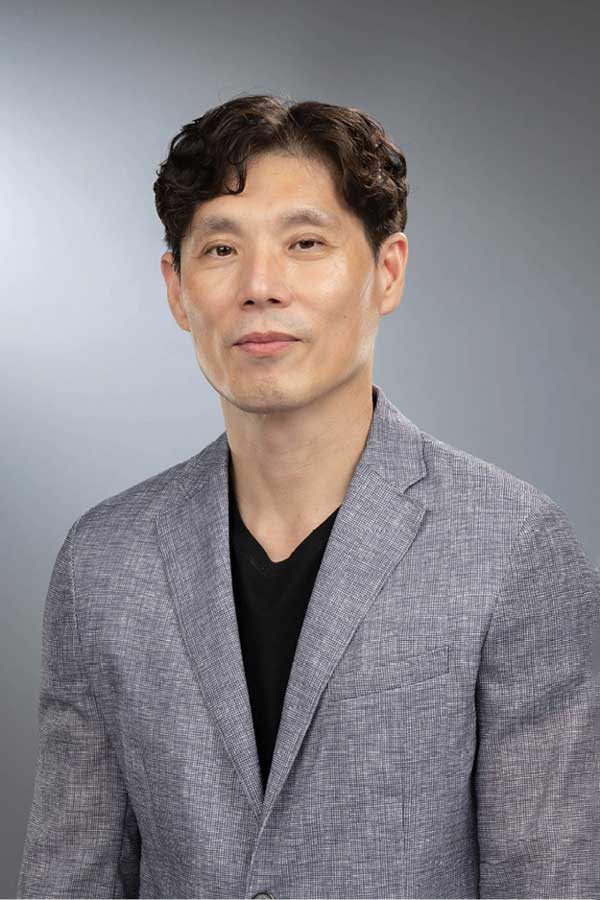
Electrical engineering Associate Professor Sungyong Jung is developing a sensing system that can be used on farms to detect greenhouse gas emissions, a major factor in climate change. His system will allow farmers to make adjustments that will reduce emissions while increasing crop yields and lowering costs.
"Farm fields emit carbon dioxide, methane, and nitrous oxide from fertilizers, cultivation of soils, animal waste, and rotting crops," Dr. Jung says. "If we are successful, farmers will be able to accurately monitor gas emissions and reduce the factors that lead to them, allowing the farmers to save money while increasing their productivity."
Measuring greenhouse gas emissions is complicated because they are produced by multiple processes. Farmers must place hundreds of sensors in their fields to monitor emissions, making the collection of data difficult, time-consuming, and expensive.
Jung's co-investigator, UT Dallas Professor JB Lee, is developing a low-cost nanosensor that can detect carbon dioxide, methane, and nitrous oxide. This will be paired with a low-power, embedded readout system Jung is creating that has long-range data transmission capability, allowing it to send information to a centralized data center. There, an individual will be able to log in to view results without having to go out and check multiple sensors in the field.
Making a Difference
Engineers with training in sustainability help agencies and industry use energy more efficiently and reduce their impact on the environment. They are forward-thinking and work to avoid activities that cause pollution rather than reacting after the fact.
To help meet the demand for this important field, engineering faculty at UTA are helping arm the next generation with the sustainability knowledge and skills they'll need to make to make their impact on the world. The college offers a minor in sustainable engineering, where students take two core courses in the topic, one economics elective, and three sustainable engineering electives in areas such as architecture, geology, engineering disciplines outside their major, and physics.
Faculty and students across the college are making great discoveries in energy, infrastructure, transportation, manufacturing, and more. Their efforts are focused on making the world more resilient and reducing the number of resources used and pollution created in the daily lives of billions. Breakthroughs created at UTA today will be impactful for generations to come.