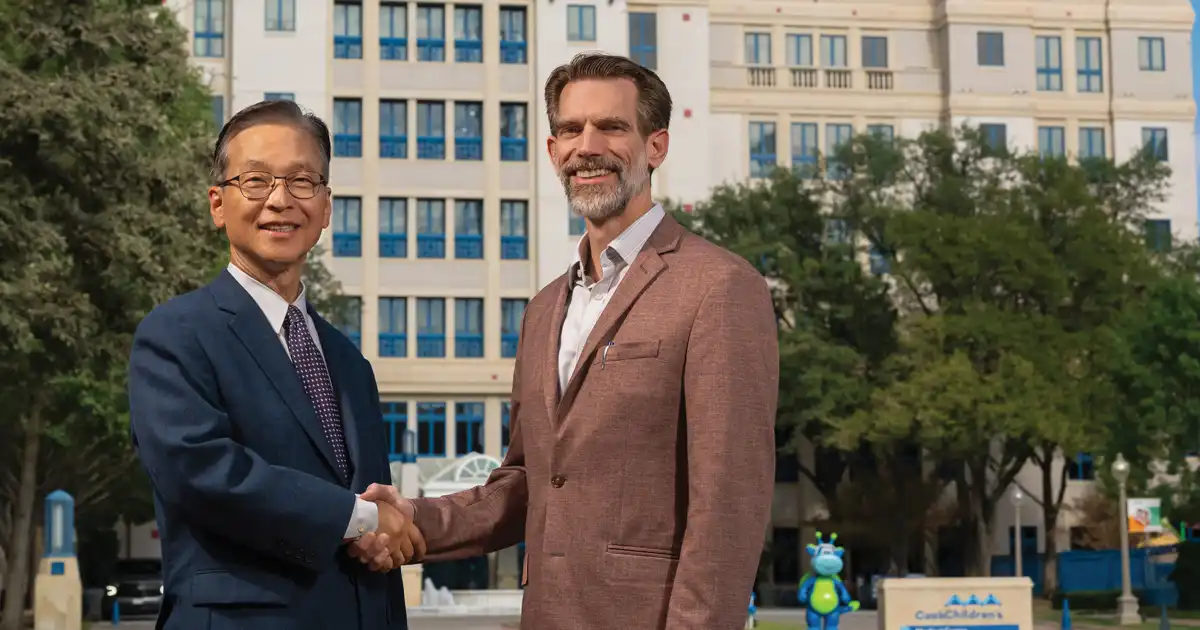
Best of Both Worlds
A new partnership between the College of Engineering and Cook Children's has paired research with clinical experience—with outstanding results.
The College of Engineering's relationship with Cook Children's HealthCare System began years ago, with a clinical immersion program that exposes upper-level undergraduates to the inner workings of a hospital during their senior design course. Within the last year, the scope of the relationship has become much broader, with the establishment of the UTA Pediatric Brain Health and Neurosciences Center and Cook Children's connection with UTA's Center for Innovation in Health Informatics. The partnership has benefited both parties, helping students gain experience, giving researchers access to much-needed data, and allowing clinicians to apply that research sooner. Working together, both parties have found, is improving care for children who need it.
Clinical Immersion
Undergraduate bioengineering students spend four years learning skills like medical device design, but applying those skills in a lab or classroom often overlooks the end-user or recipient. When students go to Cook Children's for a clinical immersion as part of their senior design course, it gives them valuable interactions with nurses who will use the equipment.
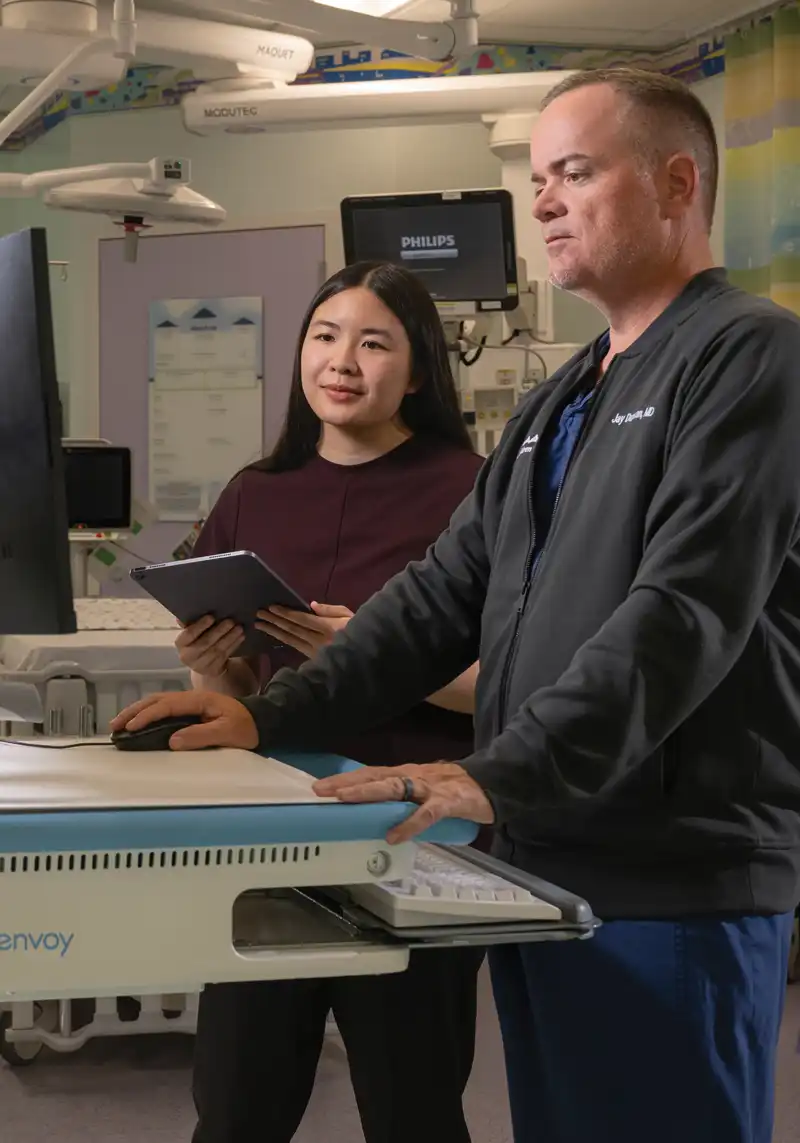
Savannah Le, who graduated in May 2026, participated in the Cook Children's immersion program as a senior design group lead. As part of the experience, she saw the heart center, shadowed in the catheter lab, and visited the cardiac intensive care unit and electrophysiology lab. She also observed an open-heart surgery undertaken to remove a large blood clot.
"My clinical immersion experience was great because it showed how much aptitude I had from my classes. It was neat to see a broad range of labs, shadow people, and be in the environment where the devices we create could be used in real-world applications on patients," Le says. "It was also valuable to be able to speak to nurses. They have so much technical experience because they work with the devices, so their viewpoint is important."
Another alumna, Ikeoluwa Adetutu, and her team first encountered Melodie Davis, director of the Pediatric Assistive Care Unit, the Epilepsy Monitoring Unit, and the Transitional Rehab Care Unit, early in their immersion experience. They went back to the hospital five more times and met with Davis each time to talk about their progress on their senior project. When the immersion program was over, Davis was still willing to give feedback on what would help patients and what the team should change.
"The experience was helpful because it was my first time in an engineering role. We had expectations for our project, but meeting doctors and staff helped us realize that sometimes those expectations aren't realistic. It was helpful to have that input. It was also important to learn how to react when feedback isn't what you expected," Adetutu says.
Integrating Healthcare and Research
Clinicians at Cook Children's work with hundreds of sick children each year, amassing huge amounts of data about cancer, epilepsy, and other ailments that could be used to improve treatments and quality of life.
Cook Children's is a very large integrated healthcare system, and its physicians are committed to making sick children better. With a wealth of clinical data, they can ask many important questions to advance care, and having research partners accelerates discovery and progress.
"We are a clinical trials machine. Our next phase was strategy, and UTA could help with that. The College of Engineering offers more resources than we knew we needed and our partnership has been successful from a results standpoint," says Will Stigall, vice president and chief research officer for Cook Children's.
About five years ago, the healthcare system and the College of Engineering began exploring a partnership that would allow the data produced through clinical trials and day-to-day interactions with patients to be used by UTA researchers.
"This is a launching point to the highest level of both institutions. We are at a point where we both have agreed to hire faculty in a joint fashion. We can provide lab space and support research groups, and in return we gain access to clinical data and physicians who are working in the same areas as our faculty," says Michael Cho, chair of UTA's Bioengineering Department.
Attacking Epilepsy
Christos Papadelis is the assistant vice president of neuroscience research for the Jane and John Justin Institute for Mind Health at Cook Children's. He is also the founding director of UTA's Pediatric Brain Health and Neurosciences Center. An expert in pediatric epilepsy, he joined Cook Children's in 2019 and quickly realized that while there were benefits and opportunities to joining the healthcare system, there were also limitations.
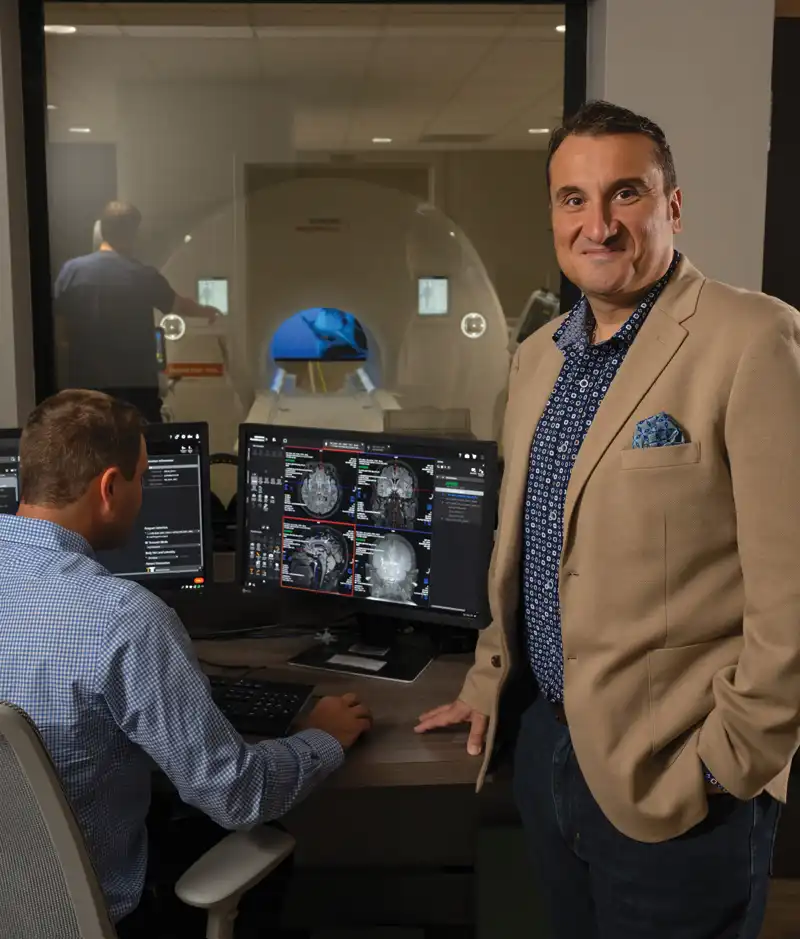
"Cook Children's offers UTA scientific questions with clinical impact. My lab focuses on translational research, not just for publications, but to help sick children. We can see, touch, and interact with patients and their families and see how they struggle in their daily lives. The knowledge we gain can be applied quite quickly for the benefit of sick children," Dr. Papadelis says.
"Having an academic partner strengthens our work. You need an academic partner to gain access to unique technology and software, which is where UTA came in. I have staffed an entire lab at UTA with 20 scientists from around the world. They teach, they collaborate, and they like the environment at UTA," he continues.
Cook Children's has greatly expanded its research, including several publications in top journals, its first R01 grant, and its first patent.
Another area where UTA helps Cook Children's is increasing access to MRIs for research. Papadelis and his team do a lot of imaging, and although the medical center has several machines, they are hard to schedule because they are in use for clinical purposes. UTA's recent investment in a Clinical Imaging Research Center, which features a state-of-the-art 3 Tesla MRI, gives Papadelis greater access to the equipment that he needs for his research, and clinicians at the hospital benefit from his findings.
Precision Medicine
When he was recruited to Cook Children's in 2025 to help the hospital expand into precision care, Dennis Lal saw that there was an opportunity to develop a health engineering program, which usually involves biomedical engineering and data science. The potential for involving UTA's Computer Science and Engineering Department would give him more freedom to explore options.
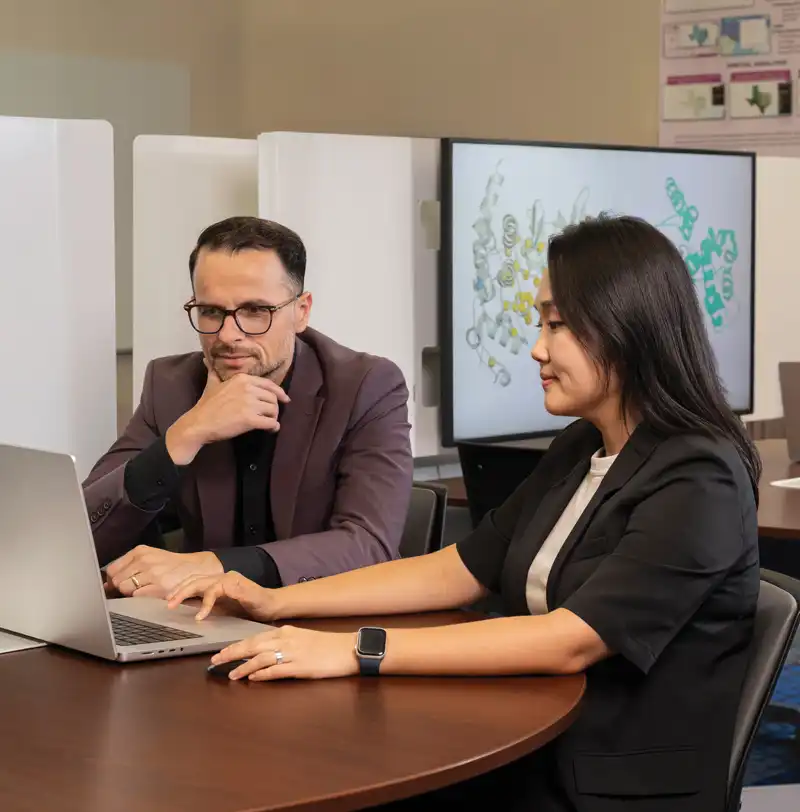
Dr. Lal leads Precision Health at Cook Children's, and as the executive director of the Center for Innovation in Health Informatics (CIHI) at UTA, he encountered enthusiasm from both sides for working toward precision care and health engineering. He was charged by Cook Children's to build a related research program.
CIHI performs health informatics research and provides opportunities for clinical healthcare research by bringing data from Cook Children's onsite and helping researchers at UTA access it.
"In my dual role, I try to develop knowledge based on available data for better care decisions focused on genetics," Lal says. "If you can anticipate genetics based on historical data, you can make predictions and develop smarter healthcare systems. We are moving in the direction of creating a partnership for massive-scale sharing of data, where anyone at UTA can access low-risk data."
Lal and his teams are teaching people to access tissue data and developing frameworks at Cook Children's to enable seamless sharing. Through his efforts, Cook Children's is creating an infrastructure where different levels of data are in the cloud to enable easier access.
"We learn from something and test it. Both institutions are growing, and it's an incredible place to be," Lal says. "I came to Cook Children's because I see that we can help children at a massive scale. CIHI is how we apply the data that's collected there. We bring knowledge to physicians and have real input daily."
Building On Each Other's Strengths
At the end of the day, partnerships like the one between the college and Cook Children's are beneficial for all involved: students, patients, UTA faculty, and physicians and researchers at the hospital. A healthcare system and a university working separately each have their own strengths, but without the other, they miss out on opportunities to really expand their work. UTA and Cook Children's have realized that they each have something to offer the other, and as the partnership evolves, they are finding better ways to share data back and forth with better patient outcomes as the ultimate result.
"Pointing an R1 university toward research in pediatrics is interesting and could yield some great discoveries," Dr. Stigall says. "We looked at UTA's strengths and what it had that we needed at scale. We found that we aligned because we both are doing different things than our peers, and this could make the partnership really successful." ₪