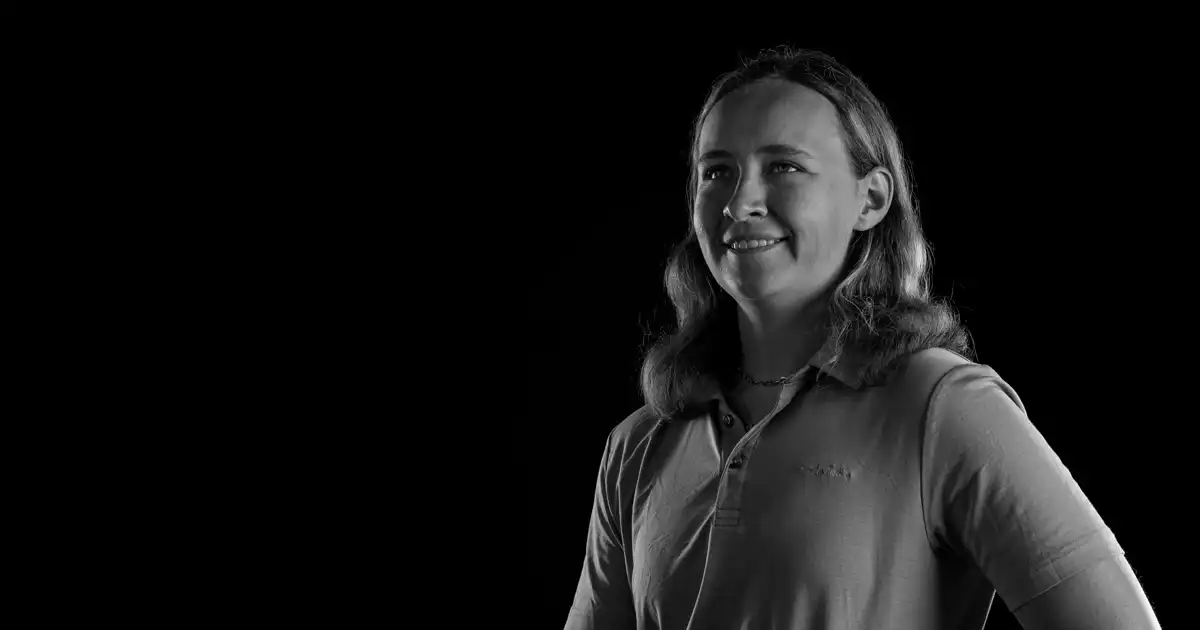
Five Questions with Austen Smith
The aerospace engineering senior has competed in two Olympic Games and brought home two medals—a bronze and a silver—in skeet shooting. Those experiences, she says, have shaped her approach to her studies.
What's been a highlight of your studies at UTA?
The most interesting thing I have learned at UTA is hypersonics. I have enjoyed learning how vehicles behave at extremely high speeds, where effects like shock waves, compressibility, and aerodynamic heating become major design challenges. It has been especially interesting to see how many areas of aerospace engineering come together in hypersonic flight.
As an aerospace engineering major, what new technologies, vehicles, or concepts excite you?
I am excited about spaceplanes and reusable aerospace vehicles, especially vehicles like the X-37B. Growing up, I used to watch the Space Shuttle, so any vehicle that builds on that legacy or pushes that concept forward is exciting to me. I am especially interested in how spaceplanes combine aircraft-like flight, orbital operations, reentry, and advanced materials into one vehicle. That combination of aviation and spaceflight is what makes them so fascinating to me.
What concepts from your studies are you most excited to apply in the field?
The class I am most looking forward to applying in my career is “Compressible Flow” with the legendary Dr. Zhen Han. It was a challenging course, but I really enjoyed the concepts because they helped me understand how high-speed flows behave. I am especially interested in shock waves—how they form and how they interact with both the vehicle and the surrounding environment. Those concepts are directly connected to my interest in hypersonics and high-speed aerospace vehicles, so I am excited to keep building on them in my future career.
You competed in two Olympic Games and won two medals. What is your biggest takeaway from the total experience — preparation, competition, and post-Olympics?
My biggest takeaway was the importance of having a system. In shooting, success came from building consistent routines, trusting the process, and having a structured approach to training and competition. I still use that mindset in everything I do now, whether it is school, engineering projects, or career preparation. Having a system helps me stay focused, organized, and consistent even when the pressure is high.
What is the best piece of advice you've ever received?
To apply what I learn in my classes to projects as much as possible. I think this is one of the best ways to truly understand engineering concepts instead of just learning them for an exam and forgetting them afterward. When I use class material in a project, I get to see how the theory connects to real problems, and that makes the concepts much more meaningful and memorable.